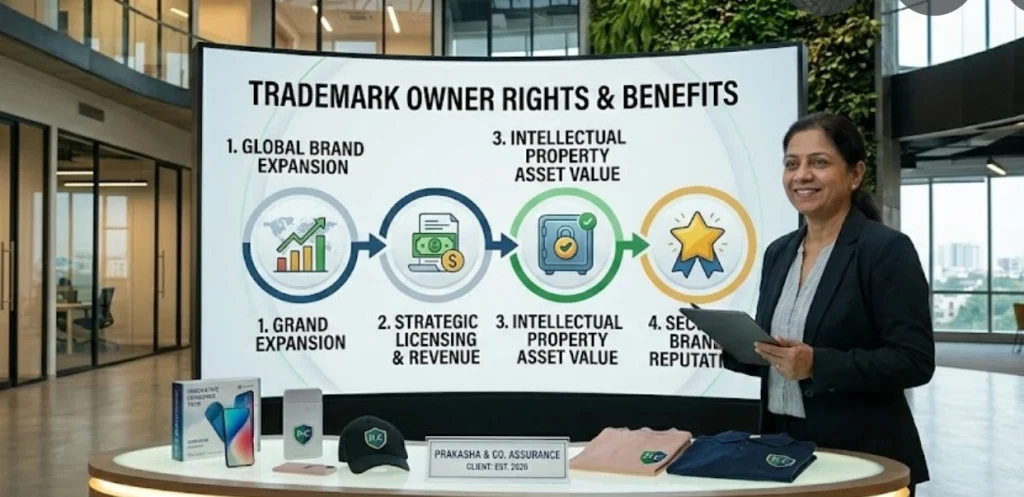
Your trademark is not just a name — it is your brand identity and legal right in the market. Many business owners use a brand name without understanding their trademark rights in India, which can lead to serious issues like copying, legal notices, or even loss of ownership. Without proper protection through trademark registration, your brand remains legally weak and open for others to use or claim.
Understanding your rights is the first step to protecting your business. Whether you are a startup, MSME, or established company, having clear knowledge of brand name protection in India and securing your rights through proper trademark registration in Bangalore ensures your business grows without legal risk.
At Prakasha & Co., we help businesses not only register their trademarks but also understand, enforce, and protect their trademark rights, so that your brand remains secure, valuable, and
What are Trademark Rights?
Trademark rights in India refer to the exclusive legal rights given to the owner of a brand name, logo, or mark, allowing them to use it and prevent others from using similar or identical marks.
Once your trademark is properly registered, you get complete legal ownership and protection under the Trademark Act, 1999. These rights help you control how your brand is used in the market and take action against any misuse.
➤ Key Trademark Rights You Get:
➤ Exclusive right to use your brand name or logo
➤ Right to stop others from using similar marks
➤ Right to take legal action against infringement
➤ Right to build brand value and goodwill
➤ Right to license or assign your trademark
➤ Important Insight:
Many businesses assume that just using a brand gives them rights, but in reality, strong trademark protection comes only through proper registration. Without registration, enforcing your rights becomes difficult and time-consuming.
To ensure your brand is legally protected, it is always advisable to secure your rights through proper trademark search and registration process before starting or expanding your business.
➤ Simple Understanding:
Trademark rights give you the legal power to protect your brand and prevent others from copying your business identity.
Types of Trademark Rights (Registered vs Unregistered)
In India, trademark rights are broadly divided into two types — registered trademark rights and unregistered (common law) rights. Understanding this difference is important to know how strong your brand protection is.
➤ Registered Trademark Rights (Strong Legal Protection)
When your trademark is registered, you get full legal protection under the Trademark Act, 1999.
➤ Benefits of Registered Trademark:
➤ Exclusive right to use the trademark across India
➤ Strong legal protection against infringement
➤ Right to file a trademark infringement case in court
➤ Easier to stop others from copying your brand
➤ Builds higher brand value and credibility
👉 Businesses that secure their brand through trademark registration in Bangalore are always in a stronger position legally.
➤ Unregistered Trademark Rights (Limited Protection)
Even if your trademark is not registered, you may still have some rights based on usage, known as prior user rights.
➤ Limitations of Unregistered Trademark:
➤ Protection only in a limited geographical area
➤ Requires strong proof of prior usage
➤ Legal action is more complex (passing-off cases)
➤ Difficult to enforce rights compared to registered trademarks
| Registered Trademark | Unregistered Trademark |
|---|---|
| Strong legal rights | Limited rights |
| Easy enforcement | Difficult enforcement |
| Nationwide protection | Limited protection |
| Legal ownership clear | Ownership needs proof |
➤ Key Takeaway:
While unregistered trademarks may have limited protection, registering your trademark is the safest and most effective way to secure your brand rights and avoid future disputes.
Why Trademark Rights are Important for Your Business
Trademark rights play a crucial role in protecting your business identity and ensuring long-term growth. Without proper protection, even a well-established brand can face legal risks and loss of reputation.
➤ Key Benefits of Trademark Rights:
➤ Exclusive Ownership of Your Brand
You get complete control over your brand name, logo, and identity.
➤ Protection from Copying and Misuse
Trademark rights help you stop others from using similar names that may confuse your customers.
➤ Build Customer Trust and Brand Value
A registered trademark increases credibility and builds strong recognition in the market.
➤ Strong Legal Protection in Disputes
You can take legal action easily against infringement and protect your business.
➤ Supports Business Expansion
A trademark helps in franchise, licensing, and attracting investors.
➤ Long-Term Asset for Your Business
A trademark becomes an intangible asset that adds value to your company.
➤ Practical Insight:
Many businesses realize the importance of trademark rights only after facing issues like copying or legal notices. Securing your brand early through proper trademark search and registration helps avoid such risks and ensures smooth business growth.
Trademark rights are not just legal protection — they are a foundation for building a strong and secure business brand.
What Happens If You Don’t Protect Your Trademark Rights?
Many businesses delay trademark registration or ignore their legal rights, assuming it is not immediately required. However, this can lead to serious consequences that may directly affect your business operations and brand value.
➤ Major Risks of Not Protecting Your Trademark:
➤ Others Can Register Your Brand Name
If your trademark is not registered, another person can apply and claim legal ownership over your brand.
➤ Risk of Receiving Legal Notice or Injunction
You may receive a legal notice or face court action for using a brand that is registered by someone else.
➤ Loss of Brand Identity and Market Reputation
Changing your brand name after building goodwill can lead to loss of customer trust and business value.
➤ Business Disruption and Financial Loss
Legal disputes and rebranding can cause unnecessary expenses and interruptions in business operations.
➤ Limited Legal Protection
Without registration, enforcing your rights becomes difficult and time-consuming.
Many clients approach us only after receiving notices or facing disputes. In most cases, these issues could have been avoided with timely action and proper trademark registration and protection.
Delaying trademark protection can cost more than registering it early.
Protect your brand today to avoid legal problems tomorrow.
How to Protect and Enforce Your Trademark Rights in India
Protecting your trademark is not a one-time activity — it requires continuous monitoring, timely action, and proper legal support. Businesses that actively protect their brand are able to avoid disputes and maintain strong market presence.
➤ Steps to Protect Your Trademark Rights:
➤ Conduct a Proper Trademark Search Before Filing
Ensure your brand is unique and does not conflict with existing trademarks through a detailed trademark search and registration process.
➤ Register Your Trademark at the Right Time
Secure your legal rights early through proper trademark registration in Bangalore to avoid future conflicts.
➤ Monitor the Market for Similar Brands
Keep track of competitors and identify any misuse of your brand name or logo.
➤ Take Immediate Action Against Infringement
Send legal notice or initiate action when someone uses a similar trademark.
➤ File Trademark Injunction if Required
In serious cases, legal protection can be enforced through trademark injunction and legal proceedings.
➤ Our Approach at Prakasha & Co
We help businesses with a complete trademark protection strategy:
➤ Identifying risks at an early stage
➤ Advising the best legal course of action
➤ Handling notices, replies, and disputes
➤ Ensuring your brand remains protected without disruption
The earlier you act, the stronger your legal position becomes.
Timely registration and enforcement are the key to protecting your brand effectively.
Real Case: Protecting Trademark Rights Successfully
We help businesses with a complete trademark protection strategy:
➤ Identifying risks at an early stage
➤ Advising the best legal course of action
➤ Handling notices, replies, and disputes
➤ Ensuring your brand remains protected without disruption
➤ Practical Insight:
The earlier you act, the stronger your legal position becomes.
Timely registration and enforcement are the keys to protecting your brand effectively.
FAQs – Trademark Rights in India
➤ What are trademark rights in India?
Trademark rights are legal rights that allow you to use your brand name or logo exclusively and prevent others from using similar marks.
➤ Do I get trademark rights without registration?
Yes, limited rights are available through prior usage, but registered trademarks provide stronger legal protection.
➤ Can I take legal action without trademark registration?
Yes, you can file a passing-off case, but it is more complex compared to infringement cases for registered trademarks.
➤ How can I protect my trademark rights?
You can protect your rights by registering your trademark, monitoring usage, and taking legal action when required.
➤ What should I do if someone copies my trademark?
You should take immediate legal action, such as sending a notice or filing injunction. Learn more through
trademark injunction and legal protection.
Author
Satish C
Registered Trademark Attorney (Code: 25620) with 20+ years of experience in trademark registration, protection, and legal enforcement. At Prakasha & Co., we help businesses secure and defend their brand rights effectively.
Page last updated: March 2026
Important Trademark Resources
➤ Trademark Registration in Bangalore
➤ Trademark Search & Registration Guide
➤ Trademark Registration Process in India
➤ Trademark Renewal in Bangalore
➤ Trademark Protection & Injunction Guide
Official Reference
➤ IP India – Official Trademark Website
➤ Trademark Public Search Portal
➤ Protect Your Brand with Strong Trademark Rights
Your trademark is your business identity. Secure it legally and protect it from misuse with proper registration and legal support.